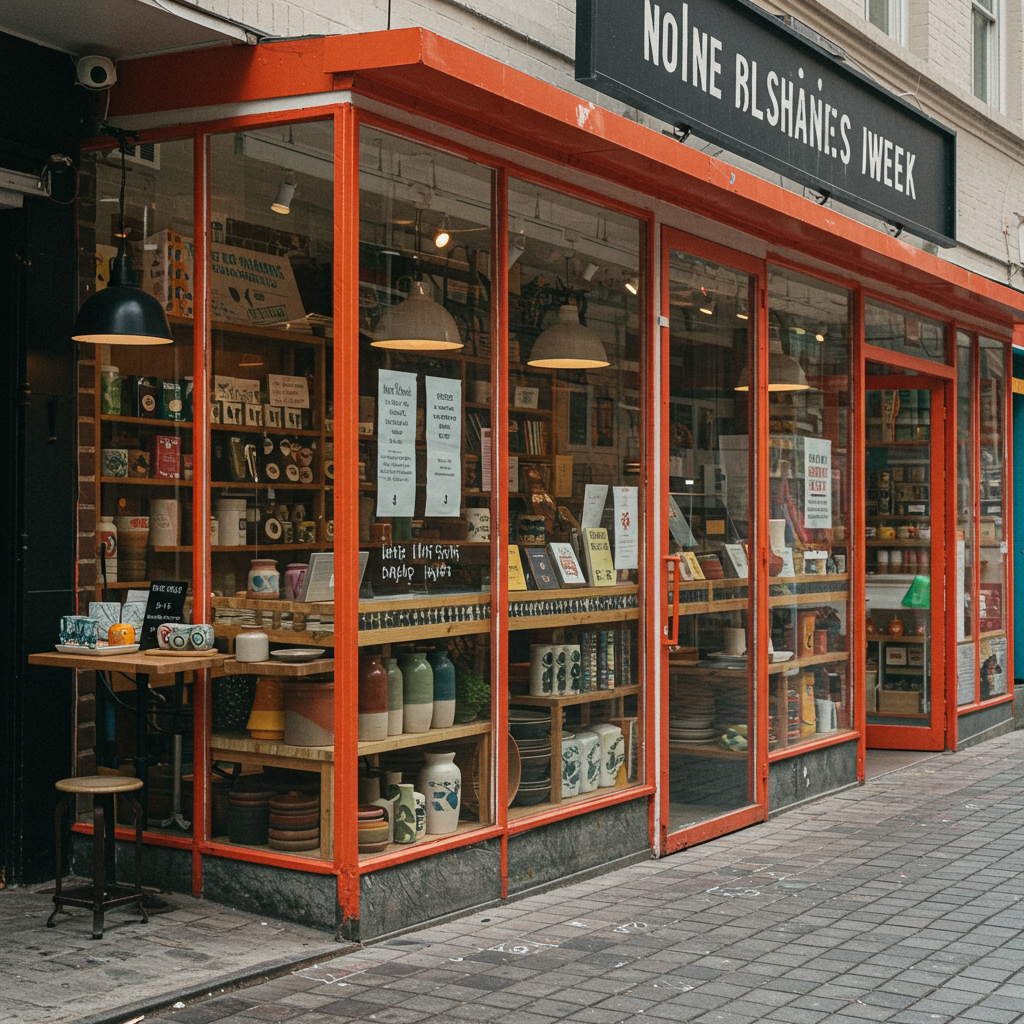
Not Home, Not Work—Just Right: Why Third Spaces Feel So Good in 2025
There’s a quiet shift happening in how we spend our time—and it’s not on the couch or at the office. It’s in that neighborhood bookstore café where you can sip coffee and browse without pressure. Or that ceramics studio with open hours, no expectations, and a playlist that somehow always feels right.
These are third spaces. And in 2025? They matter more than ever.
What Are Third Spaces?
“Third spaces” (or “third places”) are public spots where people connect outside of home (the “first space”) and work (the “second space”). Sociologist Ray Oldenburg introduced the idea back in 1989, but today it feels refreshingly relevant all over again.
Think of them as:
- Neutral ground—you don’t live or work there
- Welcoming to anyone
- Relaxed environments built for casual social interaction
- Often tied to light activities like reading, crafting, or sipping something warm
They’re not just coffee shops or coworking hubs—they’re softer around the edges. Less hustle, more hum.
You don’t need a reservation.
You don’t need a reason.
And nobody cares if you sit alone with your journal for three hours straight.
Why We’re Turning Back to Third Spaces Now
The last few years changed the way we relate to space—especially shared ones. After remote work took over, many of us realized: staying home all day isn’t always peaceful… sometimes it just feels lonely.
So now we're asking different questions:
Where can I go besides home and office?
Where can I feel connected without being overstimulated?
Is there such a thing as cozy public spaces?
Turns out—yes.
Searches like “best cafes to work from near me,” “cozy third places,” and even “social hobbies for adults 2025” have been climbing steadily since late 2023 (thanks Pinterest Predicts).
We want connection—but on our terms:
✅ No networking required
✅ No awkward small talk necessary
✅ Just enough background noise so we don’t spiral while looking at spreadsheets
In other words: modern community hangouts are back—and they’re quieter this time around.
Real Examples of Great Third Spaces
If you’ve ever wished your local café had better chairs—or wondered if somewhere exists between silence + chaos—you’ll love these ideas:
📚 Bookstore Cafés
Bookstores with espresso machines hit peak third-space energy. You can read solo or strike up conversation by the poetry shelf—it’s low-stakes human contact at its best.
Bonus points if they host author readings or zine-making nights.
🎨 Art Studios With Open Hours
Not everyone wants to join a class. Some just want access to clay, paintbrushes, and good lighting without someone hovering over their shoulder. Open-studio models let you create what you want—even if what you're making is mostly messes and new playlists.
Tip: Search for community art studios offering drop-in hours instead of rigid schedules.
♟️ Board Game Cafés
Board game cafés bring people together through nostalgia—with rules already built-in (unlike life). They're perfect when you're tired of small talk but still crave company beyond your cat named Beanbag Chair III™️ .
Great for groups… but also great for lurking until someone invites you into Catan unprompted 👀
🧵 Shared Hobby Rooms & Maker Spaces
Whether it's woodworking co-ops or textile labs filled with sewing machines no one knows how to thread yet—you don't need experience here. Just curiosity…and maybe an apron?
These creative playgrounds blend productivity with play—no KPIs required.
Why These Places Actually Matter Emotionally Too (Not Just Aesthetic Vibes)
It might look like just another latte spot—but third spaces tap into something deeper: presence among strangers who might become friends…or not…and either outcome is fine because no one expects anything from you anyway except maybe eye contact once every thirty minutes across The Croissant Table™️ .
Here’s what research backs up:
🧠 They reduce stress hormones
💬 They support real-life conversations beyond emojis
🤝 They build micro-connections (“Hey! Same seat again?” = friendship seed planted)
Urban planner Dan Hill once said cities should be designed less around traffic flow—and more around social infrastructure (Brookings Institute). Guess what counts as social infrastructure?
That tiny tea shop where baristas remember your name.
That library room where silent nods say enough.
That park bench under fairy lights next to someone sketching quietly beside their dog named Steve probably idk 😌✨🐶
How To Find Your Own Third Place This Year
Finding your ideal third place isn’t about Yelp stars—it’s about how you feel after spending time there. Try this simple approach:
1️⃣ Start local → Check libraries, event boards at coffee shops, co-op websites
2️⃣ Use search filters creatively → Try phrases like "quiet workspace," "open seating," "drop-in craft events" or "board game night near me"
3️⃣ Test it solo first → If it feels welcoming twice? That could be your place
4️⃣ Look for loiter-friendly policies → Nobody needs passive-aggressive closing-time energy
5️⃣ Bring others later → If you've found joy there alone… imagine sharing banana bread vibes with someone else who hates Slack alerts too 😅
Final Thought: Maybe Belonging Doesn’t Need Badges Anymore 🤷🏽♀️☕
Sometimes we think identity has to come from big roles—parent / partner / founder / freelancer / insert title here…
But honestly? Sitting quietly near humans doing their own thing?
That's an underrated kind of belonging too.
Your perfect Tuesday afternoon may not involve career milestones.
It might be journaling at the same corner table under string lights,
with nothing scheduled after except existing gently among others doing exactly the same thing 💛
Keywords used naturally:
third spaces meaning · what are third places · cozy public spaces 2025 · modern community hangouts · best cafes to work from near me · where to go besides home and office · social hobbies for adults 2025
Want help finding cool third-place ideas based on your vibe? Drop a comment below—I’ve got recs ✨


Leave a Reply