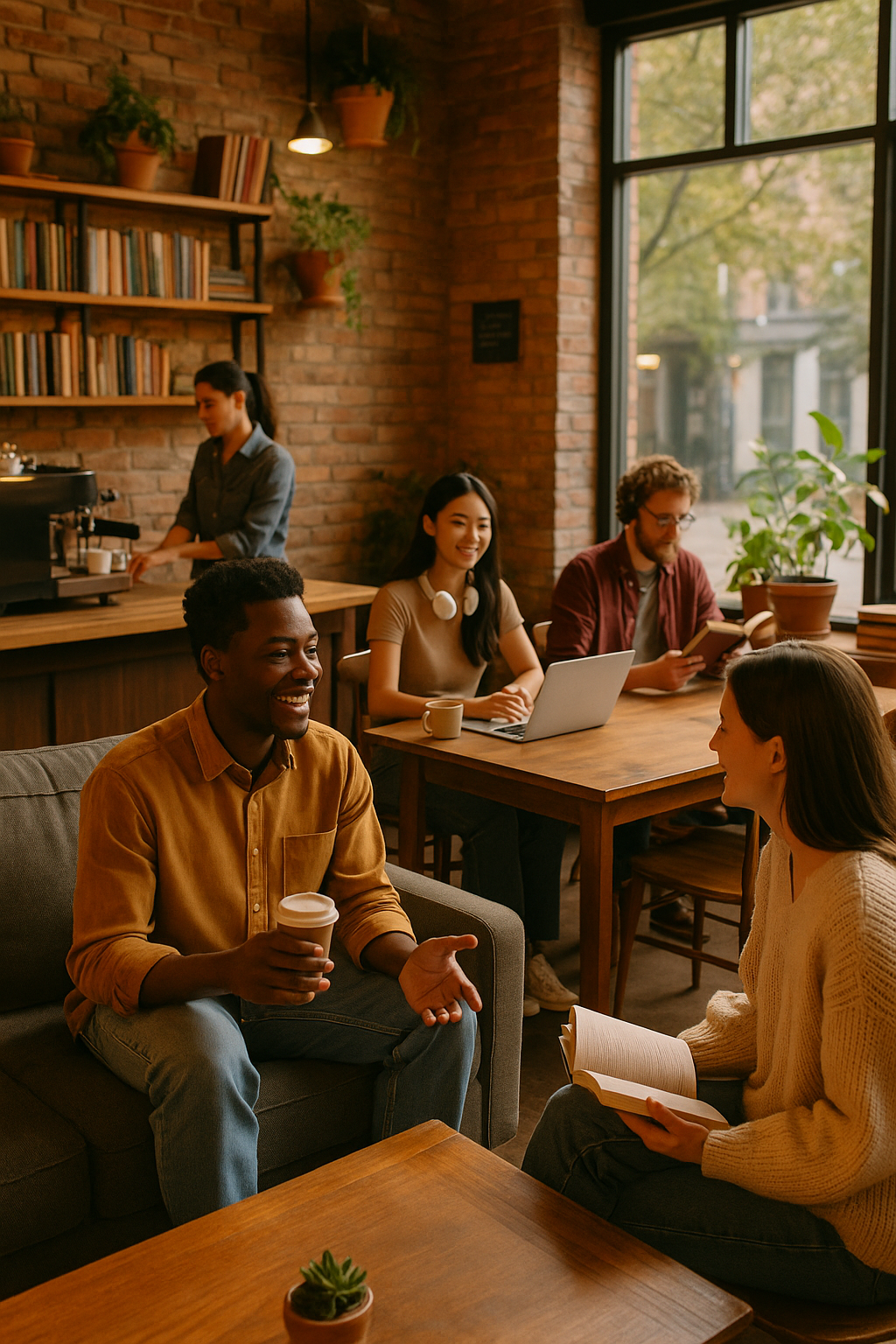
The Rise of Third Places: Why We’re All Hanging Out Somewhere That’s Not Home or Work
After years of working from our couches, scrolling endlessly, and calling Zoom calls “social time,” something feels… off. Many of us are realizing we’ve lost the simple joy of just being around people — not for work, not for family obligations — but for the sake of connection.
That’s where third places come in.
Nope, it’s not a new app or startup buzzword. It’s an old idea that suddenly feels brand-new again — and it might be exactly what we’re all looking for.
What Is a Third Place?
Sociologist Ray Oldenburg coined the term “third place” back in the 1980s. Here’s how he broke it down:
- 🏠 First place = home
- 💼 Second place = work
- ☕ Third place = anywhere else you go to be around people — without pressure
Think coffee shops with cozy couches, local bookstores with creaky floors and quiet corners, libraries that smell less like dust now and more like brewed tea. These are spaces where nobody expects anything from you except maybe holding a door open once in a while.
They’re casual.
They’re comfortable.
And they matter more than ever right now.
Why Are We Craving These Spaces Again?
Let’s be honest: after lockdowns blurred every boundary between work and life (hello, dinner meetings on Slack), most of us got stuck in two zones—home and hustle—with nowhere neutral to breathe.
We didn’t just want to leave the house—we wanted to go somewhere that felt human again. Not performative. Not transactional. Just… real.
Third places meet that need perfectly:
- No dress codes
- No productivity goals
- No algorithms deciding who sees your face
Just actual people sharing space over lattes or library books or paintbrushes.
Search trends show growing interest too:
- “What is a third place?” is trending globally
- Searches for “community cafés near me” have jumped significantly since 2023
- People are also Googling things like “quiet creative hangout,” “solo-friendly events,” and even “places to exist without spending $50”
This isn’t nostalgia—it’s recalibration.
Where Are These Places Showing Up?
All over. And not just in big cities with hip neighborhoods (though Brooklyn still tries hard).
Here are some recent examples:
🪑 In Austin: A shipping container park mixes food trucks with board game lounges under string lights
📚 In Portland: A laundromat doubles as a reading room complete with zines & vegan pastries
🎨 In Detroit: An old warehouse is now an art gallery + kombucha bar run by local teens
🎧 In Chicago: A record store hosts weekly vinyl listening nights where you can bring your own albums
These spots blend comfort with creativity—and they don’t expect perfection from anyone walking through the door.
It doesn’t matter if you're sipping oat milk chai alone or sketching badly at an open mic night—what matters is showing up as yourself without needing to explain why you're there at all.
Third Places Offer More Than Vibes
There’s actually science behind this trend too—especially when it comes to mental health.
Studies show access to welcoming social spaces lowers loneliness levels dramatically (the CDC has flagged social isolation as one of today’s biggest public health risks). You don’t need therapy-level vulnerability—you just need someone nodding across the table while you both scroll quietly next to each other on different tabs.
These spots help because:
✔️ They give structure without obligation
✔️ They let spontaneous conversations happen naturally
✔️ They attract diverse groups without forcing interaction
In short? Your neighborhood cat café might actually help you feel more grounded than another hour on TikTok—and cheaper than therapy too (unless you’re allergic… then maybe skip).
How To Find—or Build—Your Own Third Place
You probably already pass one every week without realizing it. Here's how to spot them:
👀 Look For:
❶ Cafés that stay open late but aren’t crammed during rush hours
❷ Bookstores with community boards full of flyers no one takes down
❸ Libraries offering workshops instead of silence-only rules
❹ Art studios hosting low-key drop-in nights
💬 Ask Around:
Baristas usually know what locals do when they clock out.
Look up local mutual aid groups—they often meet in these informal spaces.
Join something small—a book club, journaling group, writing circle—even if you've never done any before!
🏗 Or Make One Yourself:
You don’t need money; start tiny.
Host Sunday afternoon painting circles at your apartment courtyard.
Invite neighbors over for monthly potlucks themed around weird snacks from international groceries (durian optional).
Turn your garage into a BYO poetry salon once a month (yes really).
Consistency builds trust—and trust turns strangers into regulars faster than any marketing campaign ever could.
TL;DR – This Is About Belonging
In an age built on screens and schedules, third places offer something rare: space without expectation.
No performance.
No profit goals.
Just presence—with humans around doing their thing nearby while you do yours too.
So whether it's sipping matcha next to someone knitting quietly…
Or flipping through secondhand records beside someone much cooler than you'll ever be…
Or talking about nothing important under dim lighting…
That feeling? That pause?
That's called your third place—and it's waiting for you down the street (or maybe right inside your own living room if enough friends show up).
🧠 Want more stories about culture shifts happening quietly beneath flashy trends? Stick around here—we talk about real stuff made by real people trying their best in strange times 🤙



Leave a Reply