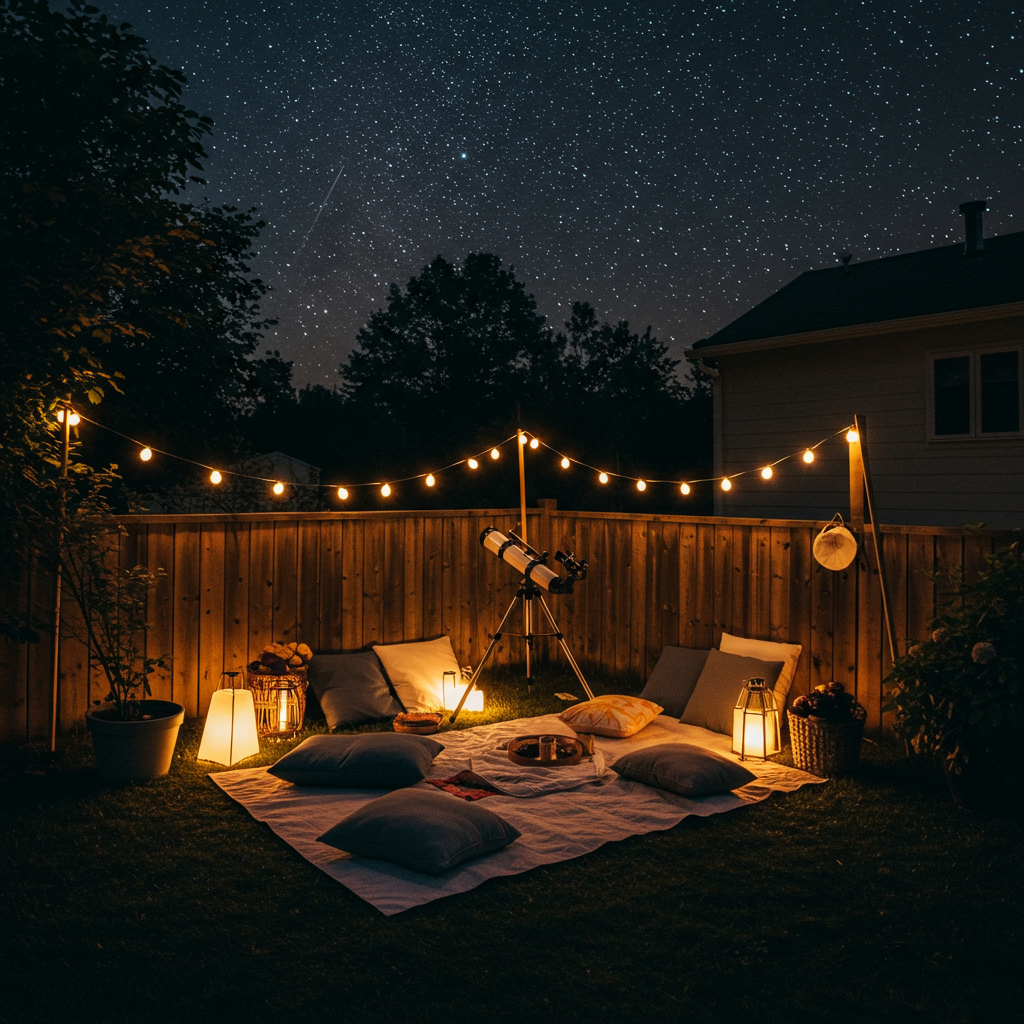
Backyard Stargazing Is the New Friday Night Out: How to Turn Your Outdoor Space into a Cosmic Hangout
Forget scrolling through your streaming queue for the hundredth time. There’s something better waiting just outside your door—and it doesn’t buffer. Backyard stargazing is quietly becoming one of the simplest, most calming ways to unwind after a long week. No tickets, no screens—just stars.
Whether you're planning a low-key date night or need solo time under something bigger than your inbox, turning your backyard into a personal planetarium might be exactly what your brain (and soul) needs.
Here’s how to start—with zero pressure and plenty of chill vibes.
Why More People Are Stargazing Right Now
Let’s be real: we all need fewer distractions and more presence in our lives. That’s probably why so many people are rediscovering stargazing—it’s quiet, cheap, and surprisingly grounding.
Interest in backyard astronomy has jumped since 2020. According to Sky & Telescope magazine, more beginners than ever are picking up telescopes or apps just to reconnect with nature—and themselves. It makes sense: staring up at infinite stars kind of puts things into perspective.
You don’t have to know the difference between Orion and O’Ryan Reynolds (sorry) to enjoy it either—you just have to look up.
Step 1: Set Up Your Outdoor Chill Spot
Before you worry about telescopes or apps, focus on comfort. This isn’t bootcamp—it’s your own little cosmic lounge space.
Simple Setup Ideas:
- Use soft string lights (skip harsh LEDs—they’ll mess with night vision)
- Throw down some floor cushions or an old quilt
- Add battery-powered lanterns if you want extra glow
- Bring snacks and drinks (more on this below)
Think “cozy picnic,” not “NASA training.”
If you live in an apartment? A balcony works too—or even an open window with sky access will do in a pinch.
Step 2: Choose Gear That Fits You (and Your Budget)
Good news: You don’t need fancy gear to get started. In fact, many people begin with nothing but their eyes—and still catch meteor showers or spot major planets like Jupiter and Saturn on clear nights.
But if you're curious about taking things further?
Beginner-Friendly Options:
🔭 Just starting out? Try binoculars first.
A pair of 7×50 binoculars can reveal craters on the Moon and even some star clusters—without breaking the bank or requiring setup time.
📦 Ready for a telescope?
Here are three solid beginner models that won’t overwhelm:
- 👉 Celestron AstroMaster 70AZ (~$140): Lightweight + easy for beginners.
- 👉 Zhumell Z100 Reflector (~$130): Compact yet powerful enough for deep-sky objects.
- 👉 Orion StarBlast II EQ (~$250): Great optics + good balance between price & performance.
Start simple—you can always upgrade later once you’ve got the bug.
Step 3: Use Apps So You Know What You’re Looking At
No shade if you’ve gazed at Venus and told someone it was “probably Mars.” We’ve all been there.
There are free (or cheap) apps that help identify constellations, track satellites, and even alert you when cool stuff is happening above:
📱 Top Picks:
- 📌 Sky Guide — Gorgeous interface; point + learn instantly.
- 📌 Stellarium Mobile — Super accurate without feeling overwhelming.
- 📌 Star Walk 2 — Tracks stars AND satellites; great night mode visuals too.
Tip: Turn down screen brightness or use red-light mode so your eyes stay adjusted for low light while using any app outdoors at night.
Step 4: Create a Mini Ritual Around It (+ Snacks Help)
The best part about backyard stargazing? Making it feel special—even if it's just ten minutes outside before bed each weeknight…or full-on Friday night plans with friends around blankets and thermoses under open sky 🌕
Build habits that make it enjoyable—not another chore on your calendar:
🎵 Soundtrack ideas:
Go ambient meets dreamy indie:
- Tycho – “Awake”
- Jonsi & Alex – “Boy 1904”
- Japanese Breakfast – “Diving Woman”
🍪 Easy snack pairings:
Keep cleanup minimal—but treat yourself:
- Chocolate-covered almonds
- Campfire popcorn w/ sea salt
- Spiked cider / hot cocoa depending on season
📝 Optional extras:
Print out constellation guides (this one from In-The-Sky.org is excellent), bring a notebook for observations—or just lie back in silence once everything's set up 👀✨
Staring at space helps quiet everything else down—which hits different after five days of chaos online/offline/life-line…
What Can I Actually See From My Backyard?
You’d be surprised what shows up when you give yourself five minutes away from indoor lighting:
☑️ The Moon – Craters visible even through basic binoculars!
☑️ Planets – Jupiter shines bright; Saturn's rings visible through entry-level scopes
☑️ Meteor Showers – Big ones happen several times yearly (like August Perseids!)
☑️ Satellites – Yep—even those dot-sized moving lights count!
☑️ Constellations – Learn seasonal favorites like Orion in winter or Scorpius during summer months
Check NASA's monthly Skywatching Calendar before heading out—there's always something worth watching!
Final Thoughts Before Takeoff 🚀
Backyard stargazing isn’t about being perfect—or knowing celestial coordinates by heart—it’s about slowing down long enough to notice what we usually miss overhead every single day (er…night).
It costs almost nothing.
Takes zero experience.
And works whether you're rolling solo sipping tea…or curled under blankets sharing constellations with someone who lets you nerd out uninterrupted 🛸❤️🌌
So maybe skip happy hour this weekend…and grab some cocoa instead?
Look up—you might find exactly what you've been missing ✨
✅ Want more tips like this without getting spammed by astrology memes?
Subscribe below 👇
(Just kidding—no newsletter here yet…we’re too busy looking up.)
Tag us @yourhandlehere next time you're watching meteors from home 🙌💫



Leave a Reply